Current Location: Blog >
American server
1.
overview of the overall decision-making process
step 1: confirm user distribution and key slas. perform traffic log statistics (source country/state/city, peak period, bandwidth/request).step 2: establish a scoring model based on the three elements of response time/cost/compliance (for example, delay weight 0.5, cost 0.3, compliance 0.2).
step 3: select candidate computer rooms based on scores (western united states: los angeles, silicon valley; eastern united states: northern virginia, new york/new jersey; central united states on demand).
2.
measurement and verification: necessary network detection commands and interpretation
1) traceroute / mtr: run mtr -r -c 100 between your current location and the candidate computer room2) ping: ping -c 20
3) iperf3: deploy iperf3 server in the candidate computer room, iperf3 -c
4) dig: dig +short @8.8.8.8 yourdomain a and dig +short @8.8.8.8 yourdomain aaaa, detect the dns resolution path and ttl.
3.
when to use a cdn first
judgment conditions: a high proportion of static content (pictures, js, css, videos), users are widely distributed and browser-based access is required, and ddos resistance and cache acceleration are required.operation suggestions: use cdn as a front-line cache to minimize origin traffic; configure long ttl, merge static files, and enable compression and image webp/avif.
4.
when to consider backbone direct connection (private/public network direct connection)
judgment conditions: a large number of real-time/dynamic requests, delay-sensitive apis, b2b transmission or synchronous backup that requires stable and large bandwidth.implementation method: purchase direct connect/expressroute/interconnect from cloud vendors, or reach ix/private interconnection (bgp/peer-to-peer) with domestic/local operators.
5.
cdn configuration practice (taking cloudfront and cloudflare as examples)
cloudfront: create distribution -> origin points to your us computer room (fill in the origin domain/ip) -> behavior settings cache policy (cache-control, minimum ttl/default ttl/max ttl) -> enable origin shield to reduce origin pressure.cloudflare: switch the domain name to cloudflare in the dns panel, set the cache level and edge cache ttl for the page rules; turn on argo smart routing to reduce cross-continental delays (pay-as-you-go).
6.
backbone direct connection configuration practice (taking aws direct connect as an example)
steps: 1) apply for a direct connect connection in the aws console and select the dx location closest to your computer room; 2) complete the physical link and loa with the local data center/operator; 3) configure vif (virtual interface) and configure bgp peering in the vpc; 4) set static/dynamic route priority in the routing table and monitor bgp neighbor status.7.
origin and cdn collaborative strategy (avoiding unnecessary return to origin)
1) set cache-control and etag: set cache-control: public, max-age=31536000, immutable for static resources; use short ttl or no-cache for dynamic interfaces.2) turn on conditional requests (304) and if-modified-since to reduce the return-to-origin bandwidth.
3) use origin shield/regional edge caches to aggregate back-to-origin requests.
8.
web server (nginx) optimization example configuration
example points: enable http/2/3, tls 1.2+, brotli/gzip, reasonable keepalive and worker settings.configuration example (simplified):
worker_processes auto;
http { sendfile on; tcp_nopush on; tcp_nodelay on; keepalive_timeout 65; gzip on; brotli on; server { listen 443 ssl http2; ssl_protocols tlsv1.2 tlsv1.3; location / { proxy_pass http://backend; proxy_cache_bypass $http_cache_control; add_header cache-control "public, max-age=60"; } } }
9.
monitoring and automation: perspectives and alerts that must be deployed
monitoring items: latency (p50/p95/p99), packet loss rate, return-to-origin rate, cdn hit rate, bgp neighbor status, tls certificate validity period.automation: use prometheus+grafana or cloud vendor monitoring to set threshold alarms (for example, the cdn hit rate is lower than 85% or the return-to-origin traffic suddenly increases by 30%).
10.
troubleshooting checklist (slowest to fastest)
1) confirm dns: dig +trace yourdomain to check whether the cdn is used; 2) traceroute to see whether the route passes through the expected backbone; 3) temporarily resolve the domain name to origin to directly compare the performance; 4) check the tls handshake (openssl s_client -connect host:443).11.
cost and compliance considerations
1) cost: cdn is billed by traffic, direct connection is billed by port/line, and the tco is compared after estimating the peak outbound and return-to-source traffic.2) compliance: if data sovereignty or privacy regulations are involved, confirm whether cross-border transmission of data is allowed, and if necessary, encrypt and audit data generated/processed in the united states.
12.
question: if american users are concentrated on the east coast, is it necessary to place the server in the east coast and turn off the cdn?
answer: no. even if the user is on the east coast, cdn still has advantages in acceleration and ddos protection for static resources. it is recommended that the main server be deployed in the us east to reduce origin latency, while retaining the cdn (in the us east, us west and global pop) for caching and as a failover layer.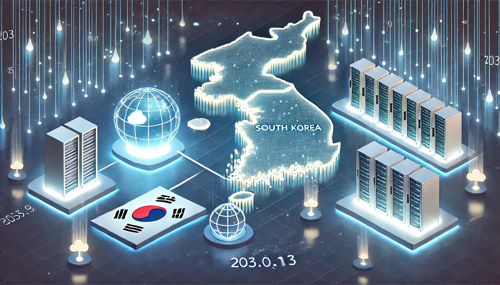
13.
question: backbone direct connection requires a large investment. how to evaluate whether it is worth it?
answer: in the initial stage, use a test link (temporary vpn or third-party acceleration) to measure latency and bandwidth benefits, and calculate the business conversion or sla savings due to reduced latency. if the monthly back-to-origin traffic is huge and the business is sensitive to delays, direct connection can usually pay for itself in 6-12 months.14.
question: how do cdn and backbone direct connections coexist to achieve the best results?
answer: put the cdn at the edge to handle caching and primary security protection; directly connect real-time/large-bandwidth back-end traffic to the core data source through the backbone or synchronize across regions. configuration: cdn is used as edge cache + origin shield, and the backbone direct connection is used for private bgp/dedicated line back-to-origin or back-end database synchronization. the two work together through routing policies and monitoring.- Latest articles
- Beginner’s Guide: Step-by-Step Instructions For Purchasing And Configuring Alibaba Cloud Hong Kong Native IPs
- Legal Compliance Concerns And Interpretations Of Compliance Recommendations For The 69 Community’s US Server
- Do Beginners Care About Recommendations For Taiwan-based Cloud Server Hosts? Common Questions And Selection Suggestions
- Which Is Better, SoftBank In Japan Or CN2? A Comprehensive Evaluation Report For Different Business Scenarios
- In-depth Analysis Of The Impact Of Server Location In Hong Kong’s High-Security Data Centers On Cross-Border Businesses
- Zhou Qun’s Weibo Taiwan Account: An Efficient Growth Strategy Combining Paid Advertising With Organic Traffic
- Operational Practice: Backup, Recovery, And Monitoring Solutions For Taiwan-Connected VPS Cloud Servers
- Cost Estimation For Vietnam CN2 Deployment And Practical Strategies To Save Costs In Ongoing Operations
- From Bandwidth To After-sales Reviews, Help You Filter A List Of Good Candidates For Web Servers In Taiwan
- A Quick Guide For Small And Medium-Sized Enterprises: Deploying Cloud Computers On Malaysian Servers And Managing Permissions
- Popular tags
Overseas Servers
Flexibility
Failure Reasons
Keepalived
Gitlabrunner
Enterprise Cloud Services
Stable Performance
Account Opening Qualification
International Links
Technology
Cross-border Development
Operator Selection
Compliance
Cloud Server Leasing
Vps Host Recommendation
Localized Testing
Ho Chi Minh City
Vps Transfer
Node
International Export
Delivery Verification
Server Recommendations
Ip Performance Comparison
Risk
Southeast Asia Cloud Server
Application Examples
Selection Suggestions
Select Server
Purchase Contract
Connection Skills
Related Articles
-
Market Trends And Future Prospects Of High-defense Cloud Servers In The United States
discuss the market trends and future prospects of high-defense cloud servers in the united states, and introduce purchasing suggestions and related technologies. -

Legal Compliance Concerns And Interpretations Of Compliance Recommendations For The 69 Community’s US Server
Addressing the legal compliance concerns regarding the use of American servers by the 69 Community, compliance recommendations are provided in aspects such as content compliance, service provider terms, domain names and privacy, and technical protection (CDN/high-level DDoS protection), along with recommendations for reliable hosting services. -

Effective Methods And Techniques To Obtain The Address Of Apple's Server In The United States
this article introduces effective methods and techniques for obtaining the us apple server address, and recommends dexun telecom as a reliable service provider.